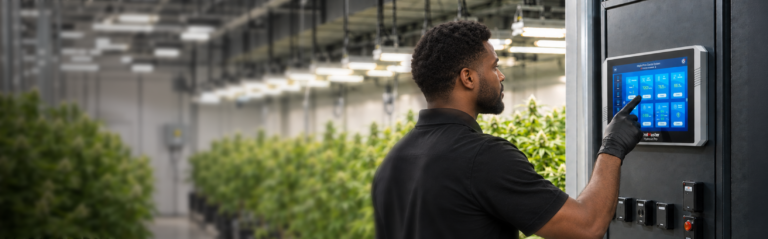

Walk through a modern greenhouse and most of what you see runs itself. Sensors feed climate computers, and those computers adjust heat, light and airflow without anyone touching a dial. Watering is the exception.
In September 2026, Greenhouse Management asked more than 80 of its readers about irrigation for its first Irrigation and Automation Market Report. The respondents are greenhouse owners, operators and managers who mainly grow bedding plants, annuals, perennials, herbs and vegetables. We were glad to sponsor the report through ThinkGrow, powered by TrolMaster. Here is our read of what the numbers say.
The short version
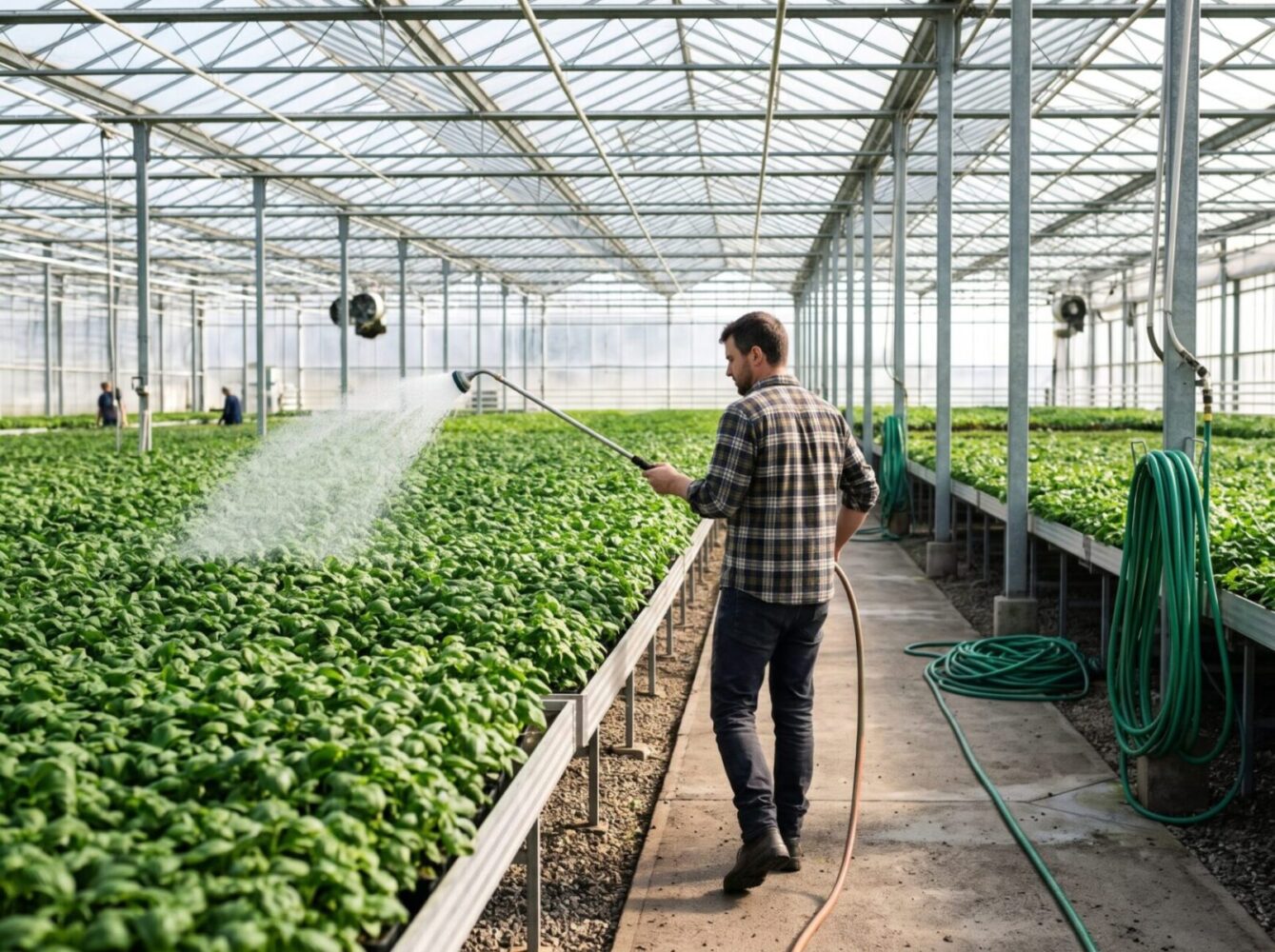
- 85% of growers water by hand, at least some of the time.
- Only 46% have automated irrigation, and just 19% of automated users tie it into their environmental controls.
- Operations over 250,000 sq ft are more than twice as likely to automate.
- 52% plan to upgrade their irrigation within three years.
- Automation eases labor worries (48% down to 28%) but raises reliability worries (24% up to 51%).
Who answered
Replies came mostly from the Midwest and South Atlantic, followed by Canada and the West Mountain region. That spread covers a good range of climates and water situations. Nearly three-quarters of respondents grow annuals, 64% grow perennials and 59% grow herbs or vegetables.
Most operations are small to mid-size: 32% have under 25,000 sq ft, and only about a quarter have more than 250,000 sq ft. Keep that scale in mind as you read on, because size shapes almost every answer.
Water sources and irrigation methods
Wells and groundwater are the main supply, used by 64% of growers. Municipal water comes next at 39%. Surface water such as ponds and rivers appears under “other,” while reclaimed water and rainwater cisterns are less common. Some growers mix sources: 11% of groundwater users also reclaim water, and 12% of municipal users do.
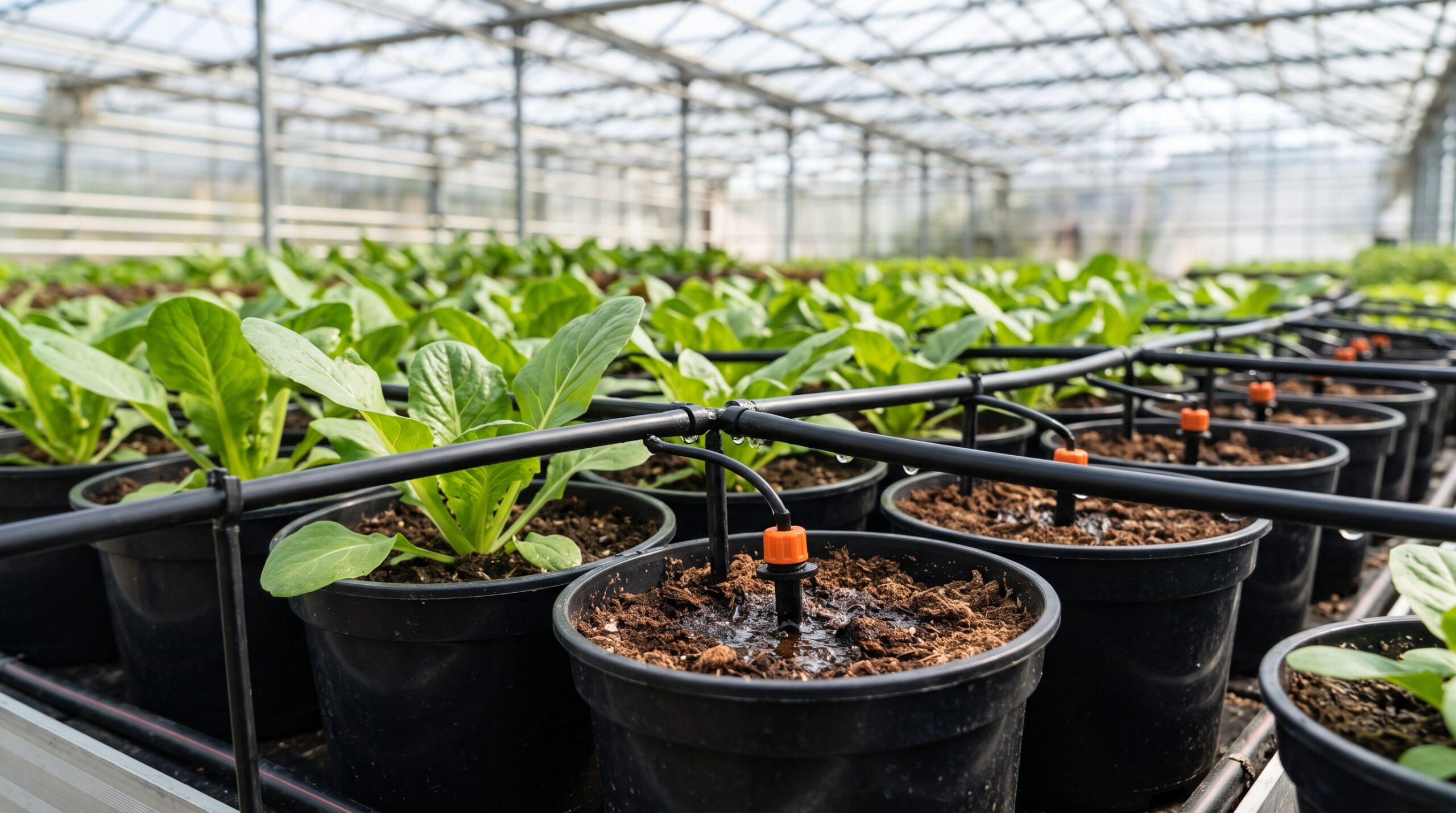
Irrigation lines carry fertilizer as well as water, so how a grower irrigates also decides how they feed. By that measure, hand-watering dominates at 85%. Drip lines are in use at 59% of operations, and many growers run both: about 58% of hand-waterers also have drip. Watering booms are rarer, and only 24% of hand-waterers also use one.
Size matters here. Hand-watering is most common below 250,000 sq ft, and small to mid-size businesses lean toward drip. Operations over 500,000 sq ft are the likeliest to use booms, flood floors or tables, and recirculating fertigation.
Monitoring: still mostly hands-on
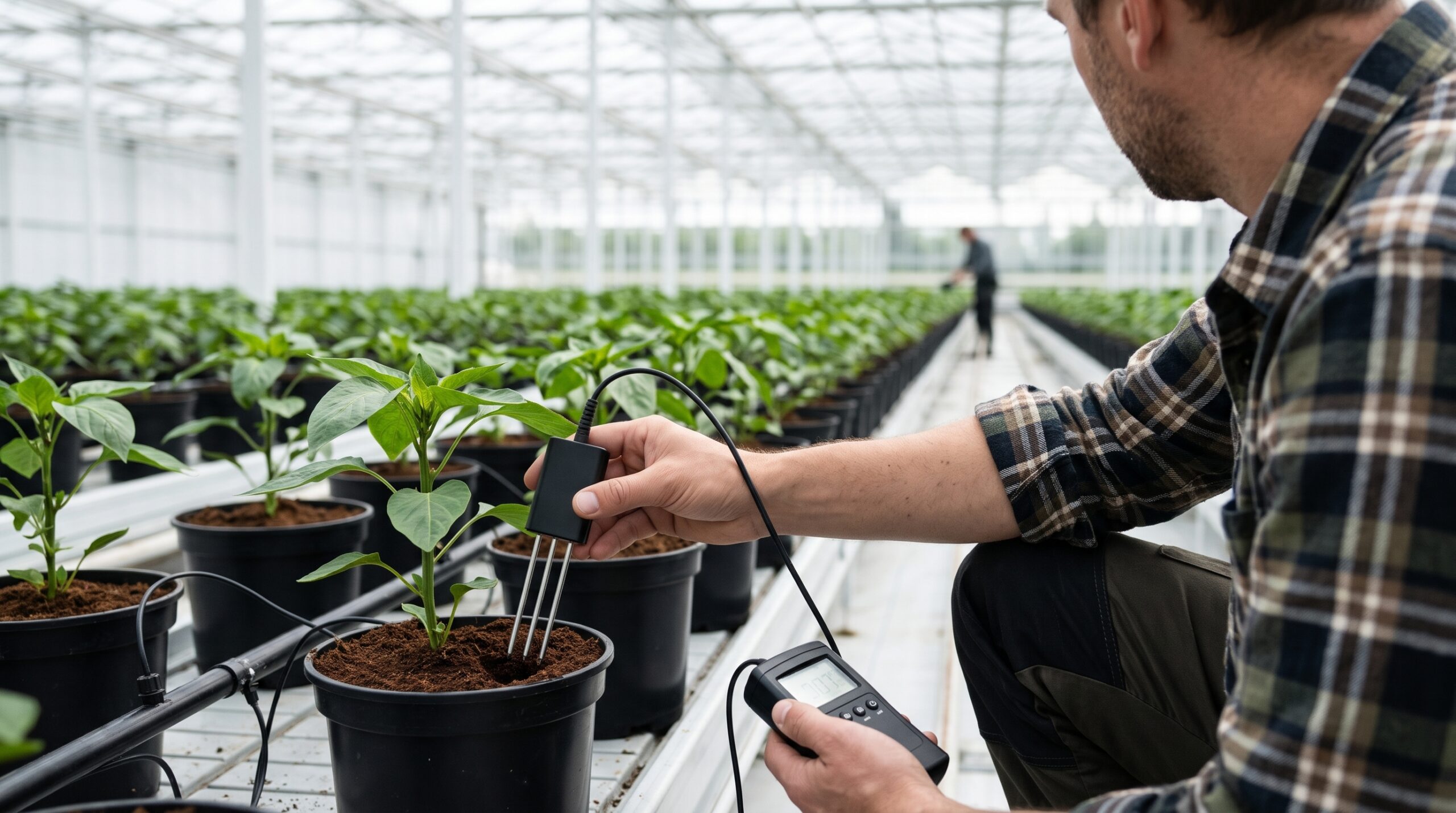
Checking in on the root zone is also a manual job. To see whether plants are taking up water, 68% inspect the substrate by hand and 60% check pot weight. Only 16% monitor drainage and leaching, and just 9% use moisture or VWC sensors in the pot or slab.
EC follows the same pattern. More than half (54%) use a handheld meter, and 44% run extraction or pour-through tests, though only 12% send samples to an outside lab. In-line EC monitoring is used by 16%, in-pot EC sensors by 6%, and another 16% do not monitor EC at all.
On feeding, 47% use water-soluble fertilizer through irrigation alone, 12% use only controlled-release product, and 36% combine the two.
Automation: the numbers behind the hose
Over 80% of growers decide when to irrigate by looking: manual or visual inspection. A fixed timer is the second most common trigger. Sensor-driven triggers, such as substrate moisture thresholds or accumulated solar radiation, trail far behind.
Only 46% say their irrigation is automated at all, and among those who do automate, 19% report a link to an environmental control system. Scale again plays a role: operations over 250,000 sq ft are more than twice as likely to have automation.
For the integration question, the report gives 19% yes and 32% no with a base of 43 responses.
Upgrade plans and remote control
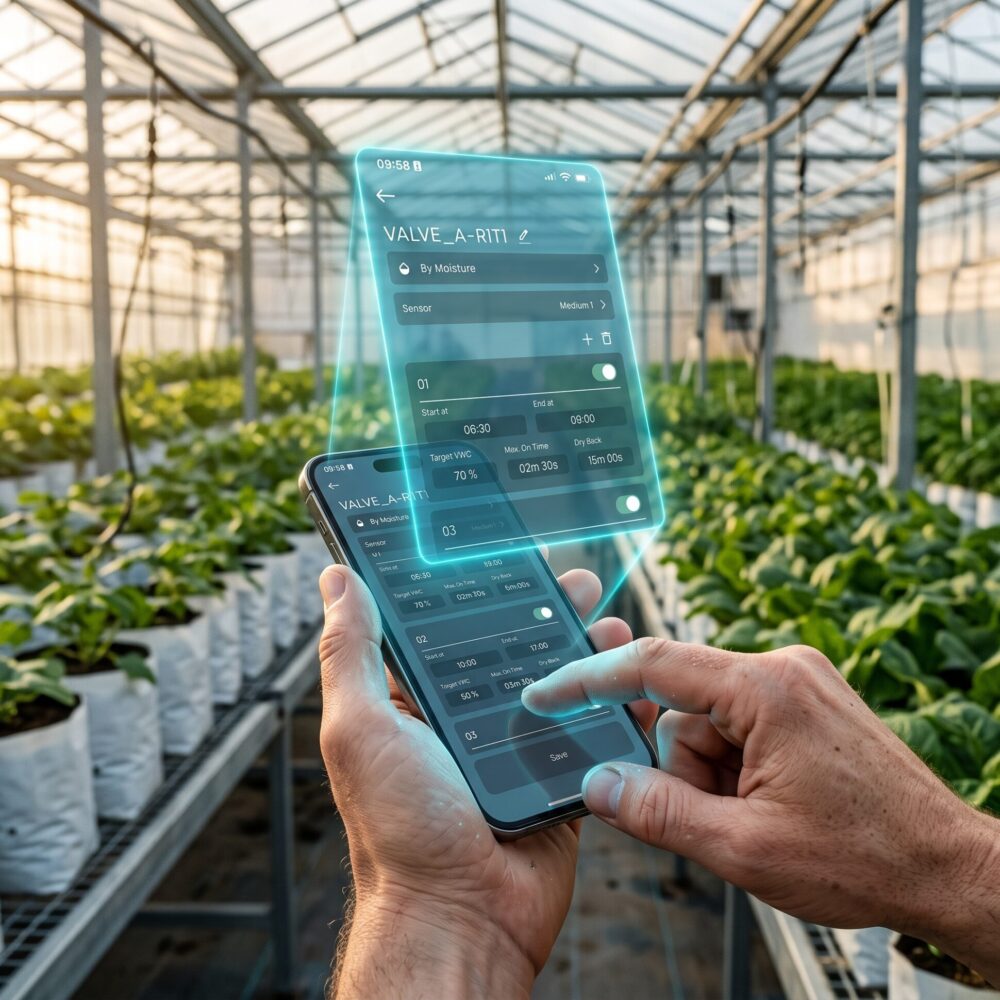
The door is open. Just over half of growers (52%) intend to upgrade their irrigation within three years, which is a natural moment to consider automation and remote access. Interest in remote access is split: 54% call control from a computer or phone somewhat to extremely important, while 46% say it matters little or not at all.
Labor and the concerns that change with automation
Staffing for irrigation is lean. Close to half of growers (46%) have just one or two people on it, while another 46% have three or more and 8% say everyone shares the task. Uniformity and crop consistency top the list of worries at 59%, with labor second at 39%.
That ranking shifts once you separate growers by automation. Labor is a concern for 48% of those without automated irrigation but only 28% of those with it. In exchange, system reliability becomes the bigger worry (51% with automation, 24% without), and so does environmental control integration (15% against 4%). Automation does not remove concerns; it swaps them for different ones.
With automated irrigation
Without
Water-use problems and conservation goals
Water trouble shows up in the plants. Growers name root health (60%), algae (47%) and foliar plant health (46%) as their biggest production problems tied to water use. When asked how much water they would like to save each year, answers were spread out, but most stop at 29%: only 14% aim for 30% or more.
What this tells us
Automation grows with operation size, and it changes what growers worry about. Even so, hand-watering remains the most common practice among small and large growers alike, labor concerns notwithstanding. For now, tradition holds.
Where we see the opening
Plants do not drink on a schedule. Their demand moves with light, vapor pressure deficit and what is happening in the root zone, and a fixed timer treats all of that as constant. Water too much and you invite saturated substrate, root-zone hypoxia, fertilizer leaching and Pythium. Water too little and substrate dries down fast, EC spikes, nutrients lock out and growth stalls.
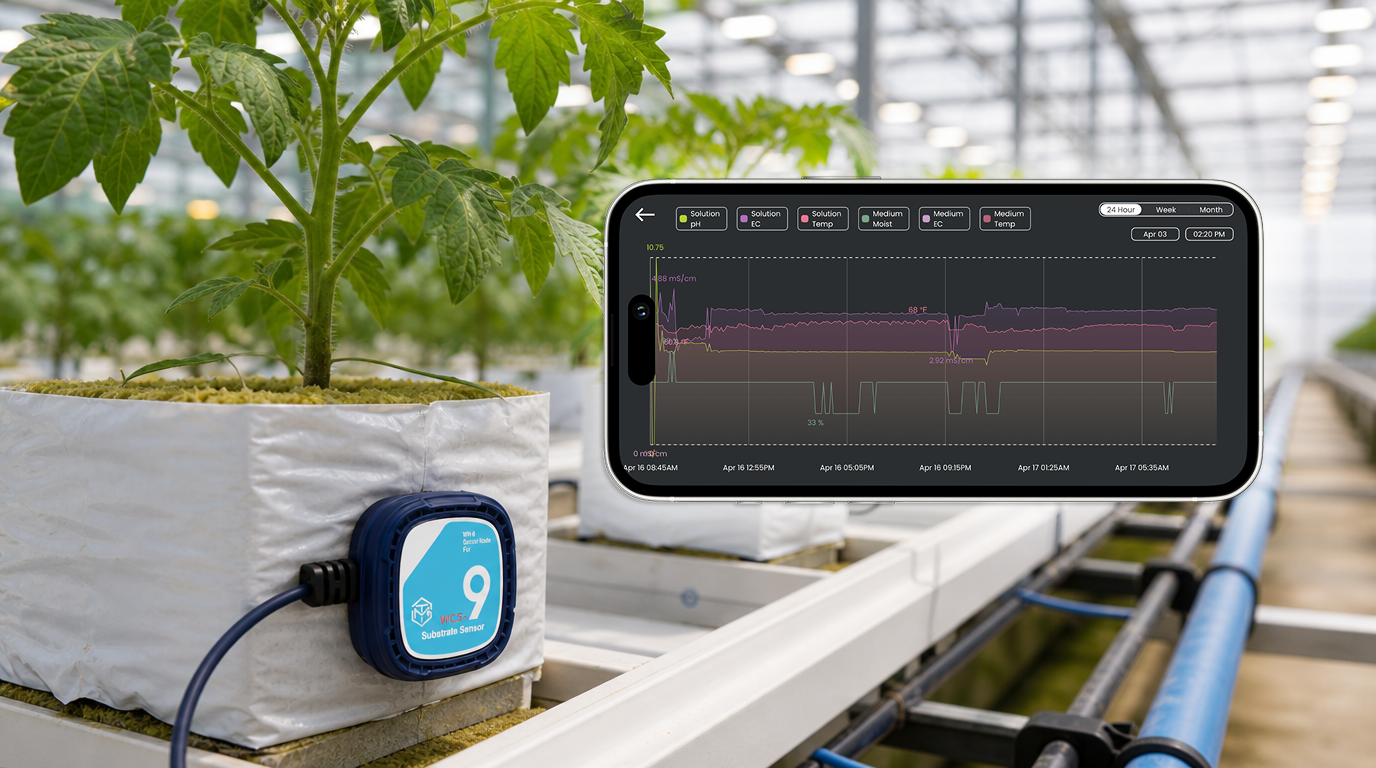
The survey shows how little of that root-zone picture growers can currently see: 9% use in-pot moisture sensors, 6% use in-pot EC sensors, and 14% trigger irrigation from moisture thresholds. Measuring volumetric water content, pore-water EC and substrate temperature gives growers a feedback loop between what the crop needs and what the system delivers. That is the idea behind feed on demand, and it is where we focus our own work.
With 52% of growers planning an upgrade in the next three years, there is a real chance to move from fixed schedules to data-driven irrigation. Our WCS-9 substrate sensor tracks the root zone so you can steer by the plant, not the clock.
Dive deeper into the 2026 Irrigation & Automation Market Report
Explore the full research, read our sponsor’s vision, or get in touch with our team about root-zone sensing and irrigation control.
Wat houdt u bezig?
Vind nuttige hulpmiddelen en gedetailleerde informatie die u bij elke stap begeleiden.